
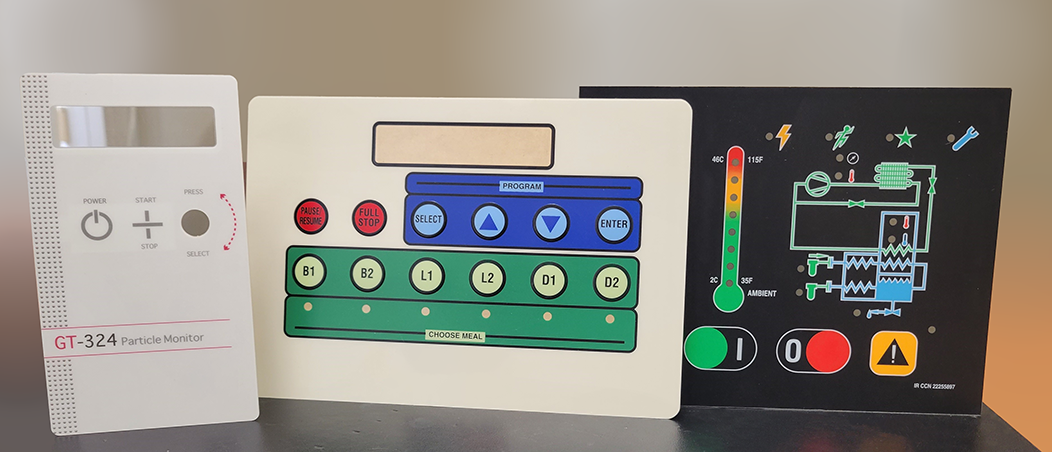
Industrial equipment operates in harsh conditions every day. Graphic overlays and control panels must withstand constant friction, chemical washdowns, UV exposure, and extreme temperatures.
If a warning label degrades or a button layout becomes unreadable, it isn’t just an aesthetic issue, it is a safety hazard, a regulatory violation, and a guaranteed cause of operator error.
For engineering and procurement teams, choosing how to print these critical interfaces is a high-stakes decision. While surface-printed overlays are more cost effective, they routinely fail under harsh conditions. That is why heavy machinery OEMs (Original Equipment Manufacturers), medical device designers, and aerospace engineers rely on sub-surface printed graphic overlays.
This blog post explores what sub-surface printing is, highlights the materials commonly used for graphic overlays, and shows why it is the most reliable choice for industrial applications.
What is Sub-Surface Printing?
Sub-surface printing, also known as second-surface printing, is the process where graphics are printed in reverse on the back of a transparent substrate.
Unlike traditional first-surface printing where ink is applied directly to the top layer and left exposed, sub-surface printing places the graphics beneath the surface of the material. Because the ink is sandwiched between the durable plastic film and the machine itself, the graphic layer is physically impossible to scratch, scuff, or wipe away from the front.
The plastic film absorbs 100% of the environmental wear and tear, unlike a standard first-surface overlay where exposed ink can easily scratch, wear away, or break down when it meets tools, chemicals, or solvents.
Now that you know what the difference is between first-surface printing and sub-surface printing, let’s explore why sub-surface printed overlays are the best choice for industrial environments.
Why Sub-Surface Printed Graphic Overlays Outperform the Competition
For industrial teams, switching from surface-printed panels to sub-surface printed graphic overlays offers a variety of advantages.
- Zero Ink Degradation from Friction and Abrasion
Consider a control panel on a CNC machine or a warehouse sorting system. Operators may press the same buttons thousands of times each week, often while wearing heavy, grit-covered work gloves.
With surface-printed panels, that constant friction can wear away text in a matter of months, leaving operators to guess each button’s function. In a sub-surface printed overlay, however, the graphics are protected beneath the top plastic layer, so they stay sharp, legible, and intact through millions of cycles.
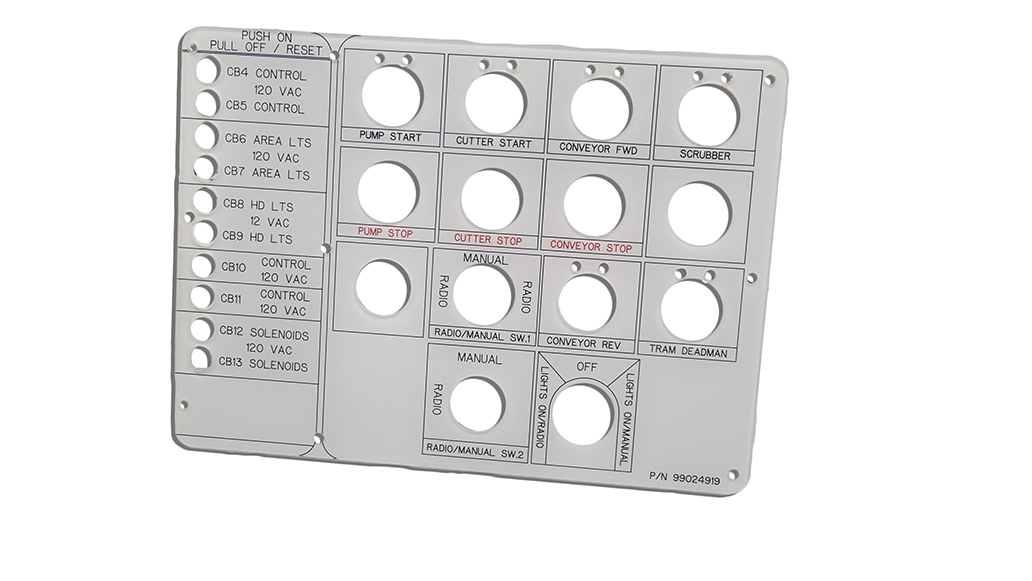
- Impermeable to Chemical Washdowns and Solvents
Industrial environments are messy. Equipment is routinely exposed to hydraulic fluids, grease, aggressive industrial cleaners, and—in medical or food processing fields—harsh sanitizers like bleach and isopropyl alcohol.
Solvents chemically attack exposed inks, causing them to bleed, fade, or dissolve entirely.
Polycarbonate and specially treated polyester serve as durable chemical barriers. When a harsh solvent lands on the surface of a sub-surface overlay, it stays on the protective plastic layer, leaving the ink sealed underneath completely unaffected.
- Seamless Integration of Windows and Backlighting
Modern industrial equipment depends on clear, intuitive communication between the operator and the machine, and sub-surface printing makes that possible with a clean, refined appearance. Because the base material is fully transparent, manufacturers can leave selected areas unprinted to create crystal-clear windows for LCD and LED displays.
It also enables the use of dead-front graphics —icons or text that remain completely hidden until illuminated from behind by an LED — creating a sleek interface without sacrificing functionality.
- Hygienic Design and Effortless Cleaning
In food processing and medical applications, buttons and mechanical switches are breeding grounds for bacteria because debris gets trapped in the crevices.
Sub-surface printed graphic overlays create a completely flat, continuous, non-porous interface, you can clean in a single pass without worrying about damaging the graphics or leaving behind contaminants.
Now that you are aware of the benefits of using a second-surface printed overlay compared to a traditional first-surface printed overlay, let’s explore the cost savings and where to find these overlays.
How to Choose the Right Overlay Material for Industrial Use
Choosing the right material for a sub-surface printed graphic overlay depends on the environment the overlay must endure and the performance the application requires.
In industrial settings, overlays are often exposed to repeated use, chemical cleaners, abrasion, impact, UV light, and temperature fluctuations. The right material helps ensure that labels remain legible, controls stay responsive, and the interface continues to perform reliably throughout the life of the equipment.
For most industrial applications, the decision comes down to two common materials: polycarbonate and polyester.
- Polycarbonate (Lexan): Best for high-impact environments. It is easy to die-cut, offers incredible clarity, is flame-retardant, and handles heavy impacts without cracking. It is the go-to choice for heavy machinery, instrumentation, and rugged consumer goods.
- Polyester (Mylar): Best for high-flex and extreme chemical environments. If your overlay features tactile membrane switches (buttons that click down when pressed), polyester can withstand millions of flexes without fatiguing or fracturing. It also offers superior resistance to aggressive chemicals compared to polycarbonate.
When engineering equipment is meant to last for years in unpredictable environments, your user interface cannot be an afterthought. Sub-surface printed graphic overlays guarantee that your branding, safety warnings, and control configurations remain as pristine on day 3,000 as they were on day one.
By investing in sub-surface printed graphic overlays, engineering teams protect their users, quality assurance teams ensure long-term compliance, and procurement teams insulate the company from the ongoing costs of field failures.