
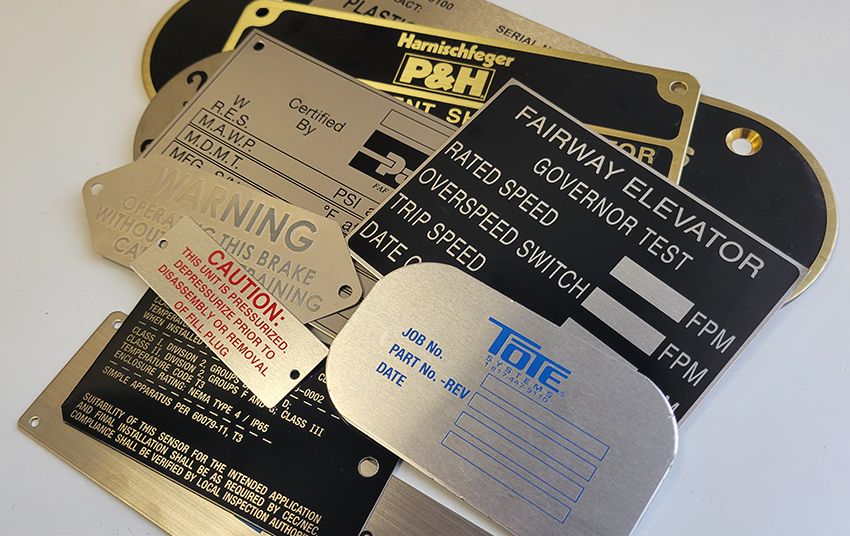
Industrial equipment tends to operate in unforgiving environments. When machinery is constantly exposed to abrasive debris, corrosive chemicals, and extreme moisture, the tags identifying that equipment must be just as resilient. This is where etched metal tags truly stand apart.
Unlike printed or surface-marked tags that can fade or peel over time, chemical etching embeds the design directly into the metal itself. This ensures permanent readability in conditions that would quickly degrade lesser materials. In this blog, we’ll explore how the chemical etching process works, why it excels in harsh environments, and which metals offer the best performance for your specific needs.
How Chemical Etching Creates High-Durability Metal Tags
Chemical etching is a sophisticated form of engraving that uses a high-pressure, temperature-controlled chemical spray to remove material, creating a permanent, recessed image in metal.
Achieving this level of precision requires a specialized sequence that relies on light-sensitive chemistry to move your design from a digital file to a physical indentation.
How the Chemical Etching Process Works: Step-by-Step
- Surface Preparation
Before any etching begins, the metal must be surgically clean. The metal is prepped to ensure the photoresist ink, or “resist” adheres perfectly, which is the only way to get consistent, sharp results across an entire batch. - Masking with Photoresist
A light-sensitive resist is applied to the surface. This is where the specific artwork—whether it’s text, logos, or serial numbers—is aligned and transferred to the plate.
- UV Exposure & Development
The plate is exposed to UV light, which hardens the resist in the exact shape of your design. The unexposed areas are then washed away, leaving bare metal only where the etching needs to occur.
- The Etch
The plate enters the etching chamber, where a controlled chemical solution dissolves the exposed metal to a precise depth. This creates the crisp, recessed features that give the tag its structural durability.
- Resist Strip & Finishing
Once the desired depth is reached, the remaining protective resist is stripped away. At this stage, the recesses can be filled with baked-on enamel for high-contrast readability or left “natural” for a clean, industrial look.
Why are Etched Metal Tags Superior for Harsh Environments?
Now that you know how etched metal tags are created, let’s look at what makes them an ideal choice for tough industrial conditions.
- Superior Abrasion Resistance: Etched metal tags offer significantly higher abrasion resistance. While a screen-printed design sits on top of the metal— leaving it vulnerable to scratches and friction—a chemically etched design is recessed into the substrate. This physical “shield” protects the critical information from surface-level damage.
- Weather and UV Resistance: The true test for many equipment nameplates is exposure to sunlight, rain, and extreme temperature shifts. Over time, UV rays from sunlight break down ink pigments, causing text to fade. While modern screen-printing inks offer some UV resistance for outdoor nameplates, they may show noticeable fading within 3-5 years. In contrast, the ink in an etched nameplate is protected within the metal’s recesses, allowing these weather resistant metal nameplates to remain crisp and clear for many years.
- Chemical and Solvent Protection: Beyond physical wear and weather, equipment nameplates may need to withstand oils, cleaning solvents, or other harsh chemicals. A screen-printed surface can be weakened or even dissolved by harsh industrial cleaners. The durability of an etched stainless steel nameplate, however, comes from both the inherent strength of the metal and the shielded ink, providing maximum protection against corrosive substances.
For any application facing extreme operational conditions, etched metal tags provide a level of permanence that printed nameplates simply cannot match.
Now that you know the physical conditions that etching can hold up to, we’ll examine the metal substrates best suited for this process.
Choosing the Right Material for your Etched Metal Nameplate
The process is only half the story; the metal you choose is what determines how the tag performs over the next decade. At Roemer Industries, we work with a range of nationally sourced metals specifically selected to handle industrial wear and tear.
Depending on your environment, here are the most effective materials for the etching process:
- Stainless Steel: This is the industry standard for sheer survival. Its high tensile strength and natural corrosion resistance make it nearly indestructible. Because it’s non-porous and easy to sanitize, it’s also the go-to choice for medical and food-service applications where hygiene is just as important as durability.
- Aluminum (Anodized and Non-Anodized): If you need something lightweight and cost-effective that still looks professional, aluminum is the most versatile option. Anodized aluminum is often recommended because the added surface layer provides extra defense against scratches and salt-air corrosion, while still allowing for high-detail graphics.
- Brass: Brass is highly corrosion-resistant, but its real value is that it’s non-sparking. This makes it a safety requirement for oil, gas, or any volatile environment where a stray spark could be catastrophic. It can also be polished if you need a high-end, professional finish to match its rugged performance.
Why Etched Metal Tags Outperform Traditional Marking Methods for Industrial Equipment
Now that you know what metal tag materials are best for etching, you can make more informed decisions when it comes to your machinery. For designs that require razor-sharp lines or extremely small text, nothing beats the precision of chemical etching. Because the process carves the design directly into the metal, it can reproduce intricate logos, complex schematics, or tiny serial numbers with perfect clarity.
Where thick ink might bleed or close in on small gaps, etching maintains crisp edges and open space. This makes it the ideal choice for equipment nameplates where legibility and detail are non-negotiable.
Frequently Asked Questions about Etched Metal Tags
- How long can I expect etched metal tags to last in outdoor environments?
Because the design is recessed into the metal, chemically etched tags are designed to last the life of the equipment. Unlike printed tags that may fade in 3–5 years, etched tags remain legible for decades, even with constant exposure to UV rays and extreme weather.
- What is the difference between laser engraving and chemical etching?
While both create a permanent mark, chemical etching is often superior for high volume and complex designs. Etching removes material without the heat stress of a laser, ensuring the metal remains flat and free of “burrs” or sharp edges.
- Can etched metal tags be used in the food and medical industries?
Yes. Stainless steel is the preferred material for these industries because it is non-porous and easy to sanitize. The etching process creates a smooth, permanent mark that does not harbor bacteria, making it ideal for food-service and medical applications.
Why Trust Roemer Industries for Your Industrial Etching?
While many suppliers offer etched metal tags, few prioritize the quality standards required for long-term industrial survival. At Roemer Industries, we don’t just “etch tags”- we deliver products built to your exact engineering specifications and compliance mandates.
- ISO 9001:2015 Certified: Our certification ensures that every stage of your order, from the initial design to the final chemical bath, is governed by a strict quality management system.
- Invested in Efficiency: We are continuously reinvesting in our facility, equipment, and our processes. By focusing on the future of chemical etching technology, we provide our customers with faster lead times and more consistent results.
- Full Compliance Documentation: We understand the paperwork is just as important as the part. We provide Certificates of Conformance for custom orders and can easily accommodate requests for PPAPs, First Article Inspections (FAIs), and more.
In harsh environments, etched metal tags deliver the durability that printed tags just can’t match. The process of chemical etching — recessing information into the metal, provides outstanding scratch, weather, and chemical resistance without sacrificing fine detail and production quality. When performance and longevity matter, etched nameplates are the clear choice.
Ready to specify etched tags for your application?